It seems that virtually every post I read at the moment regarding the publishing world concerns the big questions about the rise of digital print, of self-publishing, of the role of agents and publishers within this ever changing environment and of how it's all going to come crashing down around us etc etc etc.
Personally, I don't get what the big fuss is. Ancient Egypt once did a cracking trade in papyrus reeds until paper came along. Coal was essential for foggy London postcard scenes until electricity sparked into life. Vinyl records were all the rage until a flashy little disc appeared, and that flashy little disc is now itself disappearing with the rise of digital memory.
Things change. Those who move forward and change with it tend to succeed - those who grumble and dig in their heels tend to vanish with yesterday's news. One of the big questions hangs over the price of digital books: why so expensive? Why can't they be cheaper? Why should we pay nearly the same for a Kindle book as a paperback? Well, I agree, from an author's point of view - cheaper e-book titles make for more sales, which makes for a happy author and publisher. But the same people asking those questions are often also those who lament the demise of the traditional bookshop, and what do they think will happen to traditionally published books if all electronic titles are re-branded at, say, £2.99? They'll vanish, of course. People will use bookshops as super-sized shopping lists, jot down the titles that they see on the shelves at £7.99, then pop off home and download them for less than half the price on the Internet.
It is, I suspect, inevitable that electronic print will eventually all but replace traditional books, but the publishing industry is right to make that change slowly. If they re-branded their pricing structure overnight, virtually every bookshop in the country would close within months, the entire print industry would suffer a catastrophic loss of business and corresponding loss of jobs / livelihoods etc, and there would likely be an outcry over publishers abandoning their roots in favour of quicker profits from digital print. They can't win, whichever way they go. Those readers who prefer physical books are far outnumbered by those who would rather save a fiver, especially these days.
It's true that some e-books are hugely over-priced, but most are already a couple of pounds cheaper than their three-dimensional counterparts and represent a saving. I'm sure that over the coming years that price gap will increase as digital slowly but surely overtakes traditional publishing. Better to let it do so at a manageable rate than to let an entire sub-industry implode on itself.
And while we're on the subject, self-published authors may rejoice at the chance to be put on an even keel with their more famous traditionally published brethren. Don't bother. Publishers will still be able to provide their authors with something of extreme value: advertising power. Just because indie author Clint Cumperdink might one day find himself next to Clive Cussler on Amazon's author list doesn't mean he'll be seeing his books in the same position on the ranks. This isn't to detract from the fact that there are many talented authors self-publishing out there. However, sites such as Twitter and Goodreads are awash with indie authors "following" 30,000 people, proclaiming themselves as "Amazon best-sellers", writing reviews slating traditionally published authors and telling all of how it "should be done", but their sales figures reveal the real picture. They're utterly unknown, and no amount of blogging, Twittering or reviewing will help them. They should be busy sharpening their writing skills, not flapping about on the Internet.
Publishers, agents and editors of established publishing houses will all survive the current chaos because they can provide the brand awareness and advertising reach that virtually no author can achieve on their own. And only the best and most commercially viable authors will be able to gain their representation, just as is the case now. If you want to be one of those authors, keep writing, keep improving your skills and keep searching for an agent and a real publisher, because the more everything changes, the more it stays the same.
Wednesday, October 10, 2012

Friday, October 05, 2012
Writing a novel diary: Part 3
Before I sit down behind my computer and start frantically typing out the 100,000 or so words that make up each of the Ethan Warner novels, I like to be certain that I have a plan that I can follow. I'm not the type of author who can sit in front of a blank screen and just start typing. Much like Frederick Forsythe, who at last years' CrimeFest in Bristol revealed that he plots and plans for months before writing, I love having an ABC guide that keeps me on track during the process.
To this end, I write three final documents:
The first is my Chapter Map. Using my ( often copious ) notes gathered over many weeks or even months, I start with Chapter 1 and write a brief, succinct line about what should happen in that chapter. It's usually just a few words, and I sometimes will add a few more in red pen if there's something important that must occur which has major consequences later on in the story. These are my plants and pick-ups - information given to the reader, sometimes very subtly, that come into play much later. Sometimes it's a red-herring, other times it's something that's said or done that must occur in order for other later events to make logical sense. For instance, if Ethan realises that a vehicle is about to blow up, he must logically at some point already have learned that there's a bomb on board.
The Chapter Map usually covers about 60 chapters or so, written on a couple of sides of A4 paper. Although as the novel is written and re-drafted this map may change, it serves as a vital guide that prevents me from waffling on to long or losing my way in the plot.
The second document is my Character Map. For each character in the story I write a short paragraph that describes their nature and motivation within the story. As I write each chapter of the novel, I refer to these notes depending on who's appearing in the relevant scenes. This provides consistency in the way characters in my novels act and speak, ensuring that they are all as distinct as possible from each other in the reader's mind.
The final document is the Synopsis. Many authors hate writing a synopsis, especially those who don't like to plan ahead too much. But for me it serves two vital purposes. Firstly, because a synopsis should flow like a brief version of the story it can often highlight errors in logic or scenes that perhaps stretch the reader's imagination too far. Secondly, and perhaps more importantly, it provides an update to my agent and editor, giving them a detailed account of how the final novel will appear and the chance to raise any questions or doubts they may have about the work.
I write my synopsis in the same manner as the novel: double spaced, Times New Roman, 12 point, and try to keep it about 12 pages long. It's not easy to cram an entire novel efficiently into such a small space but the final product can often be as tense, interesting and gripping as the final novel. It's a case of bringing all of the energy and interest you're hoping for in the final work and distilling it into a single, short document that should entice and excite anybody who reads it. Think of the movie trailers you see at the cinema: although a synopsis should not be overblown like a movie trailer, and should remain a logical blow-by-blow account of the story, that doesn't mean it can't be an exciting read.
With the synopsis done and a thumbs-up from my agent and editor, it's time to sit down and get writing! In the next post I'll reveal a few of my tips and techniques for dealing with motivation, discipline and further ways of avoiding writer's block.
To this end, I write three final documents:
The first is my Chapter Map. Using my ( often copious ) notes gathered over many weeks or even months, I start with Chapter 1 and write a brief, succinct line about what should happen in that chapter. It's usually just a few words, and I sometimes will add a few more in red pen if there's something important that must occur which has major consequences later on in the story. These are my plants and pick-ups - information given to the reader, sometimes very subtly, that come into play much later. Sometimes it's a red-herring, other times it's something that's said or done that must occur in order for other later events to make logical sense. For instance, if Ethan realises that a vehicle is about to blow up, he must logically at some point already have learned that there's a bomb on board.
The Chapter Map usually covers about 60 chapters or so, written on a couple of sides of A4 paper. Although as the novel is written and re-drafted this map may change, it serves as a vital guide that prevents me from waffling on to long or losing my way in the plot.
The second document is my Character Map. For each character in the story I write a short paragraph that describes their nature and motivation within the story. As I write each chapter of the novel, I refer to these notes depending on who's appearing in the relevant scenes. This provides consistency in the way characters in my novels act and speak, ensuring that they are all as distinct as possible from each other in the reader's mind.
The final document is the Synopsis. Many authors hate writing a synopsis, especially those who don't like to plan ahead too much. But for me it serves two vital purposes. Firstly, because a synopsis should flow like a brief version of the story it can often highlight errors in logic or scenes that perhaps stretch the reader's imagination too far. Secondly, and perhaps more importantly, it provides an update to my agent and editor, giving them a detailed account of how the final novel will appear and the chance to raise any questions or doubts they may have about the work.
I write my synopsis in the same manner as the novel: double spaced, Times New Roman, 12 point, and try to keep it about 12 pages long. It's not easy to cram an entire novel efficiently into such a small space but the final product can often be as tense, interesting and gripping as the final novel. It's a case of bringing all of the energy and interest you're hoping for in the final work and distilling it into a single, short document that should entice and excite anybody who reads it. Think of the movie trailers you see at the cinema: although a synopsis should not be overblown like a movie trailer, and should remain a logical blow-by-blow account of the story, that doesn't mean it can't be an exciting read.
With the synopsis done and a thumbs-up from my agent and editor, it's time to sit down and get writing! In the next post I'll reveal a few of my tips and techniques for dealing with motivation, discipline and further ways of avoiding writer's block.
Thursday, September 27, 2012
Writing a novel diary: Part 2
The second stage of writing a novel, for me, involves collating everything I've learned in the first stage of basic plotting / research, and pinning it all down in terms of where everything should appear in the novel itself. This process is much like story-boarding a movie, but involves nothing more than my writing pad, a pen, and a LOT of thinking.
Before I was signed to a publisher ( and even afterward ) I used to feel a bit guilty for taking a long walk to think about scenes, chapters, characters, pace and dialogue. Especially in the summer. It always used to nag at me that I should be sitting behind my desk, slaving over a hot keyboard and actually writing something. However, I've come to learn that thinking is one of the biggest points about writing: you can't often write a scene without thinking about it first, and writing blind from a blank page often involves copious redrafts, which require thought themselves, which all could have been avoided with a bit of planning and, well, thinking.
So I walk, even if it's just pacing up and down in my office. I often listen to music, picking out movie soundtracks that match in tone the story I am writing as I find this helps visualise scenes much more dynamically. Not only that, but I visualise those scenes as though I'm watching a movie: the dynamics of film often provide a very useful starting point for both scene and dialogue as they're by default very brief and concise: if they weren't films would run for many hours, not two. Then, I jot down notes, piecing major scenes together, getting a feel for mood and pace with each one.
Once I've got enough major scenes ready ( usually between six and ten ) I know I'm ready to start doing my "Story Line". This, for me, is the ABC of writing a novel. I start by taking a clean sheet of A4 paper, and marking a line from top to bottom to make a left margin. At neatly seperated places down that margin, I write the words "Hook, TP1, PONR, TP2, Climax". This is the classic three act structure used by both movies and books. The hook is the first scene ( or even line ) that draws the reader in. TP1 stands for "Turning Point 1", the inciting incident that sets the hero of the story off on their journey. PONR means "Point of No Return": the hero is committed to their cause, often with all bridges of return burned. TP2 is "Turning Point 2", the point in the story where the hero starts to fight back against his or hers antagonists. The Climax, obviously, is the final scenes of the story.
Using this basic plan, I then "peg" the major scenes into place on the storyline, often moving them about, referring to my notes to see if events are occuring logically and if I can see that the story has pace and energy. Between the major scenes I start adding smaller scenes, introducing secondary characters, backstory, and in the case of the Ethan Warner series, revelations both scientific and paranormal that enhance the narrative with interesting bits of real-world research.
After a week or two of tinkering, I have my basic layout before me and I know that it can be written well as a 100,000 word novel. But despite this, I'm not yet ready to open Word and start typing. The next stage of the story involves making my Chapter Map, writing character descriptions for each of the novel's main players, and writing the synopsis for my agent and editor...
Before I was signed to a publisher ( and even afterward ) I used to feel a bit guilty for taking a long walk to think about scenes, chapters, characters, pace and dialogue. Especially in the summer. It always used to nag at me that I should be sitting behind my desk, slaving over a hot keyboard and actually writing something. However, I've come to learn that thinking is one of the biggest points about writing: you can't often write a scene without thinking about it first, and writing blind from a blank page often involves copious redrafts, which require thought themselves, which all could have been avoided with a bit of planning and, well, thinking.
So I walk, even if it's just pacing up and down in my office. I often listen to music, picking out movie soundtracks that match in tone the story I am writing as I find this helps visualise scenes much more dynamically. Not only that, but I visualise those scenes as though I'm watching a movie: the dynamics of film often provide a very useful starting point for both scene and dialogue as they're by default very brief and concise: if they weren't films would run for many hours, not two. Then, I jot down notes, piecing major scenes together, getting a feel for mood and pace with each one.
Once I've got enough major scenes ready ( usually between six and ten ) I know I'm ready to start doing my "Story Line". This, for me, is the ABC of writing a novel. I start by taking a clean sheet of A4 paper, and marking a line from top to bottom to make a left margin. At neatly seperated places down that margin, I write the words "Hook, TP1, PONR, TP2, Climax". This is the classic three act structure used by both movies and books. The hook is the first scene ( or even line ) that draws the reader in. TP1 stands for "Turning Point 1", the inciting incident that sets the hero of the story off on their journey. PONR means "Point of No Return": the hero is committed to their cause, often with all bridges of return burned. TP2 is "Turning Point 2", the point in the story where the hero starts to fight back against his or hers antagonists. The Climax, obviously, is the final scenes of the story.
Using this basic plan, I then "peg" the major scenes into place on the storyline, often moving them about, referring to my notes to see if events are occuring logically and if I can see that the story has pace and energy. Between the major scenes I start adding smaller scenes, introducing secondary characters, backstory, and in the case of the Ethan Warner series, revelations both scientific and paranormal that enhance the narrative with interesting bits of real-world research.
After a week or two of tinkering, I have my basic layout before me and I know that it can be written well as a 100,000 word novel. But despite this, I'm not yet ready to open Word and start typing. The next stage of the story involves making my Chapter Map, writing character descriptions for each of the novel's main players, and writing the synopsis for my agent and editor...
Tuesday, September 11, 2012
Writing a novel diary: Part 1
So, it's time. I'm just starting the process of writing a 100,000-plus word novel, the fifth in the Ethan Warner series. The series debut, Covenant, was published in November 2011 and reached #26 on the Sunday Times Best Seller list. The sequel, Immortal, reached the same position, both books shifting tens of thousands of copies and building awareness of my work.
With these successes in mind I know that each novel must somehow improve upon or surpass the previous title, and that places some degree of pressure on me. However, the way I deal with that is to remember that people come back to a series because they like the way they feel when they're reading it. It's not like television, when a cliff-hanger can draw viewers back: that only works within the individual book, not the series as a whole. It is consistency that wins, and that's what I aim for. With the Ethan Warner series, it's a murder-mystery weaved with scientific revelations that expose myth as fact, and sometimes vice-versa.
The provisional title for Book 5 in the Ethan Warner series is Wraith. This is the name for a ghost in some dialects, but it is also another name for something known as a "crisis-apparition". I'll leave you to research what they are, but like all central themes with the Ethan Warner series they're a genuine paranormal phenomenon and one of these spectral entities will feature in the story. That is essentially where I start from: something new and interesting that has the potential for scientific credibility.
What I've done this week is start a series of notes. These are what I call my key-points, and usually involve listing the things that I do want in the novel, and the things that I don't. As Wraith is set to be a chiller-thriller, I don't want the things that have been done before: hanuted houses, possessed family heirlooms, phantom hounds etc etc. Some of the things that I do want: psychological tension, a sense of other worldliness and perhaps wonder at the sheer volume of evidence that ghosts are not quite the myth we think that they are, and a strong sense of genuine peril ( and not just supernatural peril, but real world threat to life and limb ).
I can't obviously reveal too much here regarding actual plot, but I can say that Ethan and Lopez are in peril by this stage in the series, and are following a broader mystery that ties in closely with what they'll discover as the story unfolds. To this end, I'm also making notes of how things are at the end of Book 4 in the series, Beast, and tying it in with the threads of the new novel.
Finally, and most excitingly, I'm starting the research into real-life phenomena relevant to the story. Already I'm discovering a wealth of related material, much of it stunning enough to raise goose-bumps on my arms when I read it. That's just the beginning though: as I build up research material before coming to write the first draft, I must also begin the lengthy process of seperating what is genuine from what is fake. What I'm left with will forge the heart of the story, the revelations that leave readers of previous novels in the series inspired to search the Internet for confirmation of things they didn't believe were possible.
The next stage, which I will detail in the next post, involves weaving the plot together and developing the story in more depth. Here's where a mixture of practical planning and a BIG imagination come into their own.
With these successes in mind I know that each novel must somehow improve upon or surpass the previous title, and that places some degree of pressure on me. However, the way I deal with that is to remember that people come back to a series because they like the way they feel when they're reading it. It's not like television, when a cliff-hanger can draw viewers back: that only works within the individual book, not the series as a whole. It is consistency that wins, and that's what I aim for. With the Ethan Warner series, it's a murder-mystery weaved with scientific revelations that expose myth as fact, and sometimes vice-versa.
The provisional title for Book 5 in the Ethan Warner series is Wraith. This is the name for a ghost in some dialects, but it is also another name for something known as a "crisis-apparition". I'll leave you to research what they are, but like all central themes with the Ethan Warner series they're a genuine paranormal phenomenon and one of these spectral entities will feature in the story. That is essentially where I start from: something new and interesting that has the potential for scientific credibility.
What I've done this week is start a series of notes. These are what I call my key-points, and usually involve listing the things that I do want in the novel, and the things that I don't. As Wraith is set to be a chiller-thriller, I don't want the things that have been done before: hanuted houses, possessed family heirlooms, phantom hounds etc etc. Some of the things that I do want: psychological tension, a sense of other worldliness and perhaps wonder at the sheer volume of evidence that ghosts are not quite the myth we think that they are, and a strong sense of genuine peril ( and not just supernatural peril, but real world threat to life and limb ).
I can't obviously reveal too much here regarding actual plot, but I can say that Ethan and Lopez are in peril by this stage in the series, and are following a broader mystery that ties in closely with what they'll discover as the story unfolds. To this end, I'm also making notes of how things are at the end of Book 4 in the series, Beast, and tying it in with the threads of the new novel.
Finally, and most excitingly, I'm starting the research into real-life phenomena relevant to the story. Already I'm discovering a wealth of related material, much of it stunning enough to raise goose-bumps on my arms when I read it. That's just the beginning though: as I build up research material before coming to write the first draft, I must also begin the lengthy process of seperating what is genuine from what is fake. What I'm left with will forge the heart of the story, the revelations that leave readers of previous novels in the series inspired to search the Internet for confirmation of things they didn't believe were possible.
The next stage, which I will detail in the next post, involves weaving the plot together and developing the story in more depth. Here's where a mixture of practical planning and a BIG imagination come into their own.
Thursday, September 06, 2012
APOCALYPSE!
It's coming... The next Ethan Warner novel is due to hit shelves on November 8th, 2012 in the UK and Commonwealth. ( Readers in the USA and Canada will have to wait until early 2014, due to the slower hardback-then-paperback publishing process out there. )

Here's the cover and the back page - I think it looks awesome! The cover for Australia is slightly different and conforms with their own series of designs for the series.

Here's the cover and the back page - I think it looks awesome! The cover for Australia is slightly different and conforms with their own series of designs for the series.
Sunday, September 02, 2012
"Sock Puppets" - the whole dirty review saga.
For those who don't already know, a massive row recently erupted when it was revealed that some authors have been creating false accounts on Amazon / Goodreads etc in order not just to review their own works positively but to give unjustly poor ratings to other authors. These accounts / authors have been referred to as "sock puppets" ( for reasons not worth bothering going into ).
This whole sad thing has gone even further due to investigations by bloggers / reviewers / authors etc, who have discovered that some authors have even paid to have positive reviews posted on their works. This bizarre attempt at self-promotion has armies of both detractors and defenders all bellowing their own justifications ( it's just advertising - it's fraud - it's just repeating what others have said etc etc ).
The Internet and writing festivals have been alive with raging battles both public and anonymous, accounts on both Twitter and Amazon have been banned / closed, some authors are under heavy fire for their dishonest attempts to promote their own work or unfairly slate the work of others, and many are questioning the validity of any rating site.
Personally, I couldn't give a sh*t. I actually have one blatantly unfair review of my debut novel "Covenant" on Goodreads, where the "reviewer" ( if you can call them that ) joined the site, reviewed no less than 87 books in a single day to "up" their review rating, then wrote a one-star review of Covenant. They then periodically delete that review and re-post it in order to keep it at the top of the book's review list and in plain sight for anybody seeing the page for the first time, neatly avoiding Goodread's entirely sensible policy regarding repeated negative reviews of any one title.
Do I care? No. Why? Because all of this hoo-harr involves reviews on sites which account for a tiny percentage of the book-buying public. Think about it. Your book appears on these sites and receives, say, 100 reviews, averaging say 3.5 stars ( almost the standard score for EVERY book ever published, it seems ). Some love your work. Some hate it. Some are indifferent. That's life. A couple of people seem to hate your work so much that they create a vendetta against it. That's life too - there are idiots out there and there always will be.
Then your publisher tells you your book sold 30,000 copies in its first two months.
So you sold 30,000 copies and you got 100 reviews. That means, maths fans, that about 0.33% of your readers bothered to review your novel on a public forum. Throw in a few enthusiastic bloggers and maybe a newspaper or two and you might even reach 0.5%. Even if you're a self-published author selling 1,000 copies a year, the percentages remain the same.
The point is that nobody cares much about online reviews. People mostly buy books they think they'll like the look of, enjoy them and then go off to read something else. When your next book is published they'll either want it or they won't. If the sales of your next book increase, then they like you. If your sales fall, then either you need to think about your writing or your publisher needs to look at their PR campaign. Either way, something's amiss. Your fans, the people out there who buy books in their millions, will let you know what they think of your writing, and what Amazon or Goodreads reviewers think won't matter a jot.
It's always great to read a positive review of your work: not just because it's exciting and satisfying, but because you know that somebody out there has paid their hard-earned money and felt that they got satisfaction from doing so. Everybody wins. But I personally also enjoy reading well thought-out negative reviews, because they sometimes highlight issues with my writing that affect all readers, as opposed to the subjective opinion of the individual reviewer.
But if you get reviews that seem a little suspicious, IGNORE them. Don't respond, don't flag them and for God's sake don't reply to them. I've found some authors on-line who have done that and it just gets messy. Just stay focused and keep building your sales, as that's the real sign of a successful author. Leave the gutless bickering and the malicious tantrums to others and get on with what you enjoy: writing.
This whole sad thing has gone even further due to investigations by bloggers / reviewers / authors etc, who have discovered that some authors have even paid to have positive reviews posted on their works. This bizarre attempt at self-promotion has armies of both detractors and defenders all bellowing their own justifications ( it's just advertising - it's fraud - it's just repeating what others have said etc etc ).
The Internet and writing festivals have been alive with raging battles both public and anonymous, accounts on both Twitter and Amazon have been banned / closed, some authors are under heavy fire for their dishonest attempts to promote their own work or unfairly slate the work of others, and many are questioning the validity of any rating site.
Personally, I couldn't give a sh*t. I actually have one blatantly unfair review of my debut novel "Covenant" on Goodreads, where the "reviewer" ( if you can call them that ) joined the site, reviewed no less than 87 books in a single day to "up" their review rating, then wrote a one-star review of Covenant. They then periodically delete that review and re-post it in order to keep it at the top of the book's review list and in plain sight for anybody seeing the page for the first time, neatly avoiding Goodread's entirely sensible policy regarding repeated negative reviews of any one title.
Do I care? No. Why? Because all of this hoo-harr involves reviews on sites which account for a tiny percentage of the book-buying public. Think about it. Your book appears on these sites and receives, say, 100 reviews, averaging say 3.5 stars ( almost the standard score for EVERY book ever published, it seems ). Some love your work. Some hate it. Some are indifferent. That's life. A couple of people seem to hate your work so much that they create a vendetta against it. That's life too - there are idiots out there and there always will be.
Then your publisher tells you your book sold 30,000 copies in its first two months.
So you sold 30,000 copies and you got 100 reviews. That means, maths fans, that about 0.33% of your readers bothered to review your novel on a public forum. Throw in a few enthusiastic bloggers and maybe a newspaper or two and you might even reach 0.5%. Even if you're a self-published author selling 1,000 copies a year, the percentages remain the same.
The point is that nobody cares much about online reviews. People mostly buy books they think they'll like the look of, enjoy them and then go off to read something else. When your next book is published they'll either want it or they won't. If the sales of your next book increase, then they like you. If your sales fall, then either you need to think about your writing or your publisher needs to look at their PR campaign. Either way, something's amiss. Your fans, the people out there who buy books in their millions, will let you know what they think of your writing, and what Amazon or Goodreads reviewers think won't matter a jot.
It's always great to read a positive review of your work: not just because it's exciting and satisfying, but because you know that somebody out there has paid their hard-earned money and felt that they got satisfaction from doing so. Everybody wins. But I personally also enjoy reading well thought-out negative reviews, because they sometimes highlight issues with my writing that affect all readers, as opposed to the subjective opinion of the individual reviewer.
But if you get reviews that seem a little suspicious, IGNORE them. Don't respond, don't flag them and for God's sake don't reply to them. I've found some authors on-line who have done that and it just gets messy. Just stay focused and keep building your sales, as that's the real sign of a successful author. Leave the gutless bickering and the malicious tantrums to others and get on with what you enjoy: writing.
Wednesday, August 15, 2012
Busy summer!
I haven't written a blog post in over six weeks, mainly due to the huge volume of work I've been doing. Since my last post, I've completed the draft of the fourth novel in the Ethan Warner series, "BEAST", and handed it in to my editor. I've also been hard at work since on not one but two new projects, while also plotting the fifth novel in the Ethan Warner series. More on the proposed blog series for this soon, as I'm meeting with my publisher next week.
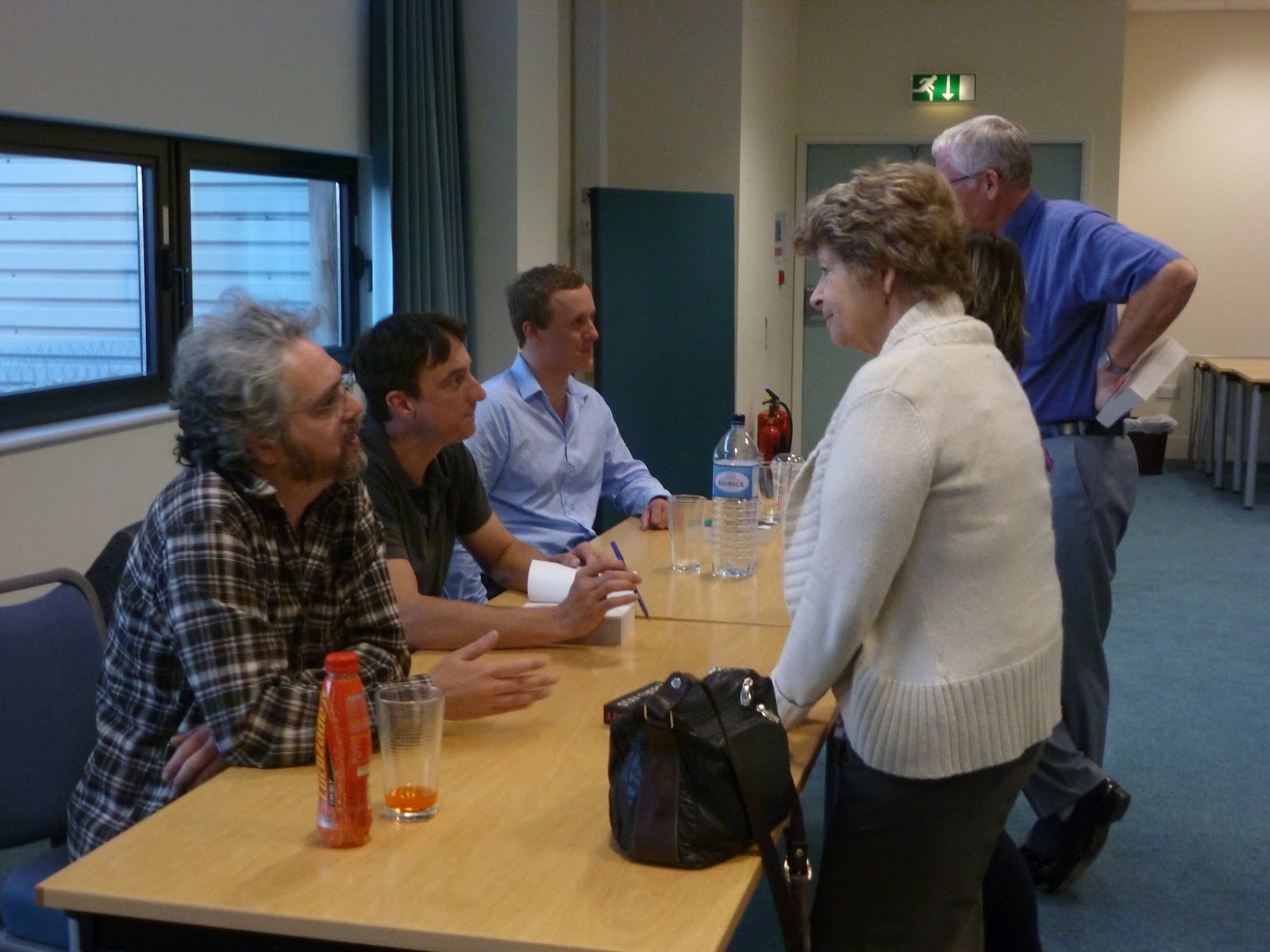
It's a lot of fun juggling so many projects around, making things work and creating new characters and stories. I was also recently asked by the Crime Writer's Association, of which I'm a member, to attend a library event in Feltham, London with two other fast rising stars of crime fiction: Tom Wood, and Stav Sherez, on August 2nd. The event was great, with a hugely enthusiastic audience and library staff, plenty of questions and anwers and a really good atmosphere.
Right now, I'm head down and writing approximately 3,000 words per day on the latest new project while planning the others during evenings and weekends. This is the life of a full-time writer, and it really is worth it!
www.stavsherez.com
www.tomwoodbooks.com

It's a lot of fun juggling so many projects around, making things work and creating new characters and stories. I was also recently asked by the Crime Writer's Association, of which I'm a member, to attend a library event in Feltham, London with two other fast rising stars of crime fiction: Tom Wood, and Stav Sherez, on August 2nd. The event was great, with a hugely enthusiastic audience and library staff, plenty of questions and anwers and a really good atmosphere.
Right now, I'm head down and writing approximately 3,000 words per day on the latest new project while planning the others during evenings and weekends. This is the life of a full-time writer, and it really is worth it!
www.stavsherez.com
www.tomwoodbooks.com
Tuesday, July 03, 2012
New Blog series: Ethan Warner Book # 5!
A bit of breaking news for those aspiring authors who follow my blog. In the next few weeks I'll be starting a blog diary here that will document the writing of an entire Ethan Warner novel ( provisionally titled "WRAITH" ). Running for approximately one year, I'm hoping to chart the process from beginning to end to show how I go about writing a 120,000 word novel.
Everything except the actual story-line will be covered ( no sense in revealing too much or there wouldn't be any point in reading the finished article! ). Research, plotting, cliff-hangers, science, character, dialogue and narrative: if it's part of the novel, I'll write about it and detail the challenges and the thinking behind creating the next installment of the series.
My publisher, Simon & Schuster, are going to be involved and are fully behind the idea, so keep an eye on my blog over the next few weeks - I'm hoping that the first blog installment will appear around early August!
Everything except the actual story-line will be covered ( no sense in revealing too much or there wouldn't be any point in reading the finished article! ). Research, plotting, cliff-hangers, science, character, dialogue and narrative: if it's part of the novel, I'll write about it and detail the challenges and the thinking behind creating the next installment of the series.
My publisher, Simon & Schuster, are going to be involved and are fully behind the idea, so keep an eye on my blog over the next few weeks - I'm hoping that the first blog installment will appear around early August!
Wednesday, June 27, 2012
The Dark Pages!!
Love your crime dark and shady? Enjoy catching up on latest releases and competitions? Want to read articles and reviews by published authors? Then you'll be wanting to sign up to The Dark Pages, a new site managed by international publishing house Simon & Schuster! You may even read words there penned by my own fair hand....

The Dark Pages is a fabulous new site, filled with all manner of crime related articles. Agent X is the mysterious man behind the scenes, lingering beneath a street light and investigating everything in the world of crime fiction before reporting back to you, the reader. Make it worth his while and get down there right now.

The Dark Pages is a fabulous new site, filled with all manner of crime related articles. Agent X is the mysterious man behind the scenes, lingering beneath a street light and investigating everything in the world of crime fiction before reporting back to you, the reader. Make it worth his while and get down there right now.
Friday, June 01, 2012
Awesome aspiring author's contest!
For all aspiring authors: The Writer's Workshop are holding a series of competitions, one of which will see the lucky winner receive direct feedback from a leading publisher, lunch with best-selling author Harry Bingham, and a whole load of other goodies.
Follow the link below for more information, and get writing!!
http://www.writersworkshop.co.uk/competitions.html
Follow the link below for more information, and get writing!!
http://www.writersworkshop.co.uk/competitions.html
Sunday, May 27, 2012
IMMORTAL #1 Fiction Heatseeker!!
I received some fabulous news just before departing for CrimeFest in Bristol - IMMORTAL has shot straight into the #1 position in The Bookseller's fiction heatseeker chart, and was just two copies shy of hitting the national top 50 fiction list ( which covers all fiction books in the UK including children's etc ).
My debut, COVENANT, achieved the same position but not nearly as quickly, so this is an awesome result. Fingers firmly crossed that the novel keeps climbing the charts. My publisher, Simon & Schuster, posted the below image on Twitter recently: it shows just how hard they work to promote my novels, and turn dreams into reality.
CrimeFest was a great experience: I was on two panels, both of which I really enjoyed, and I met a huge number of authors both published and aspiring. There were a lot of BIG names present this year; Lee Child, Jeffery Deaver, Frederick Forsyth, Sue Grafton and many others, along with agents, editors and fans. Being the new guy in town I decided to hang back a bit and watch the whole show unfold over the weekend, but the people present were so incredibly friendly that I found myself being invited out to dinner with a group of authors and a top journalist ( thanks Matt ) or approached by editors and invited for drinks that went on late into the night ( thanks Rachel ), or having a few beers with hugely enthusiastic aspiring authors with a big plan and great ideas ( cheers Mark ).
Thanks to everybody whose path I crossed, or stumbled into, and I'll be back next year without a doubt :o)

My debut, COVENANT, achieved the same position but not nearly as quickly, so this is an awesome result. Fingers firmly crossed that the novel keeps climbing the charts. My publisher, Simon & Schuster, posted the below image on Twitter recently: it shows just how hard they work to promote my novels, and turn dreams into reality.
CrimeFest was a great experience: I was on two panels, both of which I really enjoyed, and I met a huge number of authors both published and aspiring. There were a lot of BIG names present this year; Lee Child, Jeffery Deaver, Frederick Forsyth, Sue Grafton and many others, along with agents, editors and fans. Being the new guy in town I decided to hang back a bit and watch the whole show unfold over the weekend, but the people present were so incredibly friendly that I found myself being invited out to dinner with a group of authors and a top journalist ( thanks Matt ) or approached by editors and invited for drinks that went on late into the night ( thanks Rachel ), or having a few beers with hugely enthusiastic aspiring authors with a big plan and great ideas ( cheers Mark ).
Thanks to everybody whose path I crossed, or stumbled into, and I'll be back next year without a doubt :o)

Wednesday, May 23, 2012
CrimeFest
I'm off down to CrimeFest in Bristol tomorrow, looking forward to being on panels on the Thursday and Friday and generally meeting fans of crime fiction in general. I'll be on a high too, as IMMORTAL entered the paperback bestseller chart at No.32 in its first week! I'm the only newcomer that high on the list, so it's a fabulous start for the second novel in the Ethan Warner series. Fingers crossed for more great news and reviews in the weeks to come!
If you're in Bristol for the convention, feel free to say hello!
If you're in Bristol for the convention, feel free to say hello!
Wednesday, May 16, 2012
Great Eurocrime review for COVENANT!
Got a fabulous review for COVENANT recently at the much respected Eurocrime site:
http://eurocrime.co.uk/reviews/Covenant.html
COVENANT was Simon & Schuster's third best-selling e-book this week, so if the above review sounds good to you, you know where to go:
http://www.amazon.co.uk/Covenant-ebook/dp/B005PMMPWO/ref=tmm_kin_title_0?ie=UTF8&m=A3TVV12T0I6NSM

http://eurocrime.co.uk/reviews/Covenant.html
COVENANT was Simon & Schuster's third best-selling e-book this week, so if the above review sounds good to you, you know where to go:
http://www.amazon.co.uk/Covenant-ebook/dp/B005PMMPWO/ref=tmm_kin_title_0?ie=UTF8&m=A3TVV12T0I6NSM

Tuesday, May 08, 2012
IMMORTAL
It's here! If you ever wanted to know how people might actually find a way to cease and perhaps even reverse their age, then you're in the right place! The novel hits shelves this Thursday, with mass market advertising and posters in main line stations across the country...

I'm really looking forward to seeing the second novel in the Ethan Warner series hit the shelves. It's another big step in a publishing journey that gets more exciting by the day. Enjoy!

I'm really looking forward to seeing the second novel in the Ethan Warner series hit the shelves. It's another big step in a publishing journey that gets more exciting by the day. Enjoy!
Monday, April 30, 2012
COVENANT e-book Special Offer!
To promote the imminent launch of IMMORTAL on May 10th, COVENANT will be available as an e-book for just £0.99! This limited edition price is available across all major retailers including Amazon Kindle and the Apple iBookstore.
The promotion also reveals the new style of covers that will become the hallmark of the series.
The promotion kicks off today, so if you've yet to read about Ethan Warner's exploits, now is a great time to start!
http://www.amazon.co.uk/Covenant-ebook/dp/B005PMMPWO/ref=tmm_kin_title_0?ie=UTF8&m=A3TVV12T0I6NSM

The promotion also reveals the new style of covers that will become the hallmark of the series.
The promotion kicks off today, so if you've yet to read about Ethan Warner's exploits, now is a great time to start!
http://www.amazon.co.uk/Covenant-ebook/dp/B005PMMPWO/ref=tmm_kin_title_0?ie=UTF8&m=A3TVV12T0I6NSM

Friday, April 20, 2012
Workload.
I normally try to make a new ( and hopefully interesting ) post at least once a month, but since late March the sheer volume of work I'm doing is pretty much taking up all of my time. New novels, new projects and the editing of novels heading towards production all compete for space in the daily diary and, quite often, there just aren't enough hours in the day.
Not that I'm complaining, mind. Any aspiring novelist reading this would cheefully tear off their own arms with their bare hands to trade places with me - I know this because just a couple of years ago I would have done the same.
There's so much that I could post about, but all of it is "in the pipeline" as opposed to confirmed, and as such I don't think it wise to start rattling on about what "could happen" when, in the end, nothing might happen. All of it's HUGE but equally nebulous, so my trap must stay firmly shut for the time being.
IMMORTAL is due out on May 10th, just a few weeks away, and it has a new cover which I'll post here as soon as it's finalised. I've seen a preview though and it looks fantastic! Very much hoping that it achieves the same success, or better, than my debut, COVENANT....
Not that I'm complaining, mind. Any aspiring novelist reading this would cheefully tear off their own arms with their bare hands to trade places with me - I know this because just a couple of years ago I would have done the same.
There's so much that I could post about, but all of it is "in the pipeline" as opposed to confirmed, and as such I don't think it wise to start rattling on about what "could happen" when, in the end, nothing might happen. All of it's HUGE but equally nebulous, so my trap must stay firmly shut for the time being.
IMMORTAL is due out on May 10th, just a few weeks away, and it has a new cover which I'll post here as soon as it's finalised. I've seen a preview though and it looks fantastic! Very much hoping that it achieves the same success, or better, than my debut, COVENANT....
Tuesday, March 13, 2012
Character Building.
For many authors, one of the hardest things to do is build convincing characters. In the world of commercial thriller fiction, where by default a novelist is asked to take the reader out of the ordinary world, it can be extremely tough to create characters that can be both believable and inspiring at the same time. Make your character too tough or invincible, and many readers will complain that they're not believable; make them too vulnerable, and you're stepping out of your genre altogether.
It's a tough call to make, to find a narrow spectrum of attributes that enables your hero to be tenacious, resilient and resourceful without becoming so unassailable as to insult the reader's intelligence. The simple fact is that no one author is ever going to please all of their readers all of the time: my own debut novel, Covenant, has a review on one website that lovingly praises the realism and well developed character of Ethan Warner, my main protagonist, whilst right next to it sits another review complaining of a lack of character development for.... Ethan Warner.
I've been thinking a lot about character building as a result of these apparently contradictory opinions. It's easy to put it down to the readers' differing personal tastes, but I've come to the conclusion that something must be wrong to provoke any such wildly differing opinions on any one piece of work, and in my case at least I think it boils down not to a novel's characters themselves but how those characters fit the novel in question.
I've been watching a lot of TV dramas lately, those with two main protagonists. Shows like Rizzoli and Isles ( adapted from Tess Gerritson's novels ) really show how it should be done: both the leads are experts, but in totally different fields. Both are unrealistically talented, yet it doesn't matter because their skills perfectly fit the world they inhabit and their attitudes, friendship and banter keep the viewer coming back for more. Another hit show currently running, The Walking Dead, does much the same thing but within a more serious world of survival and hardship. What these shows have in common is that the characters, friend or foe, are in constant conflict with each other, and conflict is what makes thriller fiction tick. But it's not the conflict of 1940's movies, with a moustachioed mastermind villain and the upstanding British agent in pursuit - it's real, day to day conflict of character that we all know ourselves from school or work or whatever, amplified to cater to the audience demand for something out of the ordinary, to be entertained by characters facing things that, most likely, we will never have to face.
Commercial fiction works much like these kind of shows, with characters placed in high-risk situations or careers whom we then follow. While keeping a viewer entertained for an hour is perhaps a bit easier than keeping a reader hooked for 400 or more pages, the same rules apply. If your lead character's nature perfectly complements the world they inhabit, then everything else will become more believable to the reader. Heroic or cowardly, humurous or droll, strong or weak or troubled or upbeat, the character must fit their world perfectly or somebody, somewhere, will find fault. The less that do, the more likely your next work will find success in a tough marketplace.
It's a tough call to make, to find a narrow spectrum of attributes that enables your hero to be tenacious, resilient and resourceful without becoming so unassailable as to insult the reader's intelligence. The simple fact is that no one author is ever going to please all of their readers all of the time: my own debut novel, Covenant, has a review on one website that lovingly praises the realism and well developed character of Ethan Warner, my main protagonist, whilst right next to it sits another review complaining of a lack of character development for.... Ethan Warner.
I've been thinking a lot about character building as a result of these apparently contradictory opinions. It's easy to put it down to the readers' differing personal tastes, but I've come to the conclusion that something must be wrong to provoke any such wildly differing opinions on any one piece of work, and in my case at least I think it boils down not to a novel's characters themselves but how those characters fit the novel in question.
I've been watching a lot of TV dramas lately, those with two main protagonists. Shows like Rizzoli and Isles ( adapted from Tess Gerritson's novels ) really show how it should be done: both the leads are experts, but in totally different fields. Both are unrealistically talented, yet it doesn't matter because their skills perfectly fit the world they inhabit and their attitudes, friendship and banter keep the viewer coming back for more. Another hit show currently running, The Walking Dead, does much the same thing but within a more serious world of survival and hardship. What these shows have in common is that the characters, friend or foe, are in constant conflict with each other, and conflict is what makes thriller fiction tick. But it's not the conflict of 1940's movies, with a moustachioed mastermind villain and the upstanding British agent in pursuit - it's real, day to day conflict of character that we all know ourselves from school or work or whatever, amplified to cater to the audience demand for something out of the ordinary, to be entertained by characters facing things that, most likely, we will never have to face.
Commercial fiction works much like these kind of shows, with characters placed in high-risk situations or careers whom we then follow. While keeping a viewer entertained for an hour is perhaps a bit easier than keeping a reader hooked for 400 or more pages, the same rules apply. If your lead character's nature perfectly complements the world they inhabit, then everything else will become more believable to the reader. Heroic or cowardly, humurous or droll, strong or weak or troubled or upbeat, the character must fit their world perfectly or somebody, somewhere, will find fault. The less that do, the more likely your next work will find success in a tough marketplace.
Saturday, February 18, 2012
The International Crime Fiction Convention: Bristol.
Good news from the CrimeFest convention: I'll be appearing on two panels along with several other authors.
On Thursday, 24 May 13:30 - 14:20 : "They're All Out To Get You - It's a Conspiracy!"
Dean Crawford
Chris Ewan
Adrian Magson
Emlyn Rees
Participating moderator: Tom Harper
and on Friday, 25 May 10:10 - 11:00 : "Historical Crime Fiction: Stepping Back in Time - How Do You Choose Your Time and Place?"
Dean Crawford
Antony Hays
Rebecca Jenkins
Dolores Gordon-Smith
Participating moderator: Roz Southey
I'll be at the convention for all three days, and as it's my first I'm quite excited to be there and meet other authors ( which includes a number of VERY big names! ). If you're in the area or are a big fan of crime writing and want to attend, get yourself signed up and come on down to Bristol!
Sunday, January 29, 2012


Tuesday, January 03, 2012
Forthcoming titles in 2012.
Happy New Year to all those who pass by my blog!
2011 was a hell of a year for me, and this coming year seems like it could be even bigger! Lots that I'd like to post about but can't right now as I don't want to be counting my chickens before they've hatched, but I can reveal the following:
My agent, Luigi Bonomi, has negotiated with my publishers, Simon & Schuster, who have agreed to publish two more novels in the Ethan Warner series, bringing the total so far to five books! This year, I'll be working on books 4 & 5 in the series, having completed the third at the end of 2011.
The second novel in the series, currently titled "Immortal", is to hit the shelves on May 10th 2012. The third, currently under the working title of "Continuum", will be published November 10th 2012.
I'll also be appearing at both the International Crime Fiction Convention (CrimeFest) in Bristol on 24th-27th May, and at the Theakston's Old Peculiar Harrogate International Crime Festival on 19th - 22nd July. No word on whether I'll be on any panels, but will post here should anything interesting come up.
In addition I'm currently working up a synopsis for a Young Adult series based around similar science to the Ethan Warner books, on the advice of my agent. YA is a rapidly growing market and there's huge potential there, provided I can produce the goods. It's going to be a heavy work-load for this year, but every moment is going to be worth it. Who says writers have it easy?
2011 was a hell of a year for me, and this coming year seems like it could be even bigger! Lots that I'd like to post about but can't right now as I don't want to be counting my chickens before they've hatched, but I can reveal the following:
My agent, Luigi Bonomi, has negotiated with my publishers, Simon & Schuster, who have agreed to publish two more novels in the Ethan Warner series, bringing the total so far to five books! This year, I'll be working on books 4 & 5 in the series, having completed the third at the end of 2011.
The second novel in the series, currently titled "Immortal", is to hit the shelves on May 10th 2012. The third, currently under the working title of "Continuum", will be published November 10th 2012.
I'll also be appearing at both the International Crime Fiction Convention (CrimeFest) in Bristol on 24th-27th May, and at the Theakston's Old Peculiar Harrogate International Crime Festival on 19th - 22nd July. No word on whether I'll be on any panels, but will post here should anything interesting come up.
In addition I'm currently working up a synopsis for a Young Adult series based around similar science to the Ethan Warner books, on the advice of my agent. YA is a rapidly growing market and there's huge potential there, provided I can produce the goods. It's going to be a heavy work-load for this year, but every moment is going to be worth it. Who says writers have it easy?
Subscribe to:
Posts (Atom)